“Will you come to The United States with me, Dad?” I ask my father. I’ve longed for a road trip with him since reading ‘Zen and the Art of Motorcycle Maintenance’ and neither of us are getting any younger. “I won’t go to a big city mind!” he says adamantly. I have Oklahoma in mind. “There’s Route 66, Will Rogers, Indian Festivals and of course lots of wide open spaces,” I add. Oklahoma is making a huge impact on the Irish travel scene for nostalgic reasons and its appeal to Baby Boomers.
My plan works and we take a direct flight from Dublin to Chicago on American Airlines. With a short two hour connection we arrive in Will Rogers Airport to balmy temperatures and easily accessible car hire. “That’s a grand airport,” my father comments, as we set off on Meridian Highway for the start of our adventure. Okla-homa is a Choctaw Indian word, meaning ‘Red People’, and one of the most notable features of the Oklahoman landscape is the ‘Red Earth’ – the same earth described in the first chapter of Steinbeck’s Great American novel, ‘The Grapes of Wrath’.
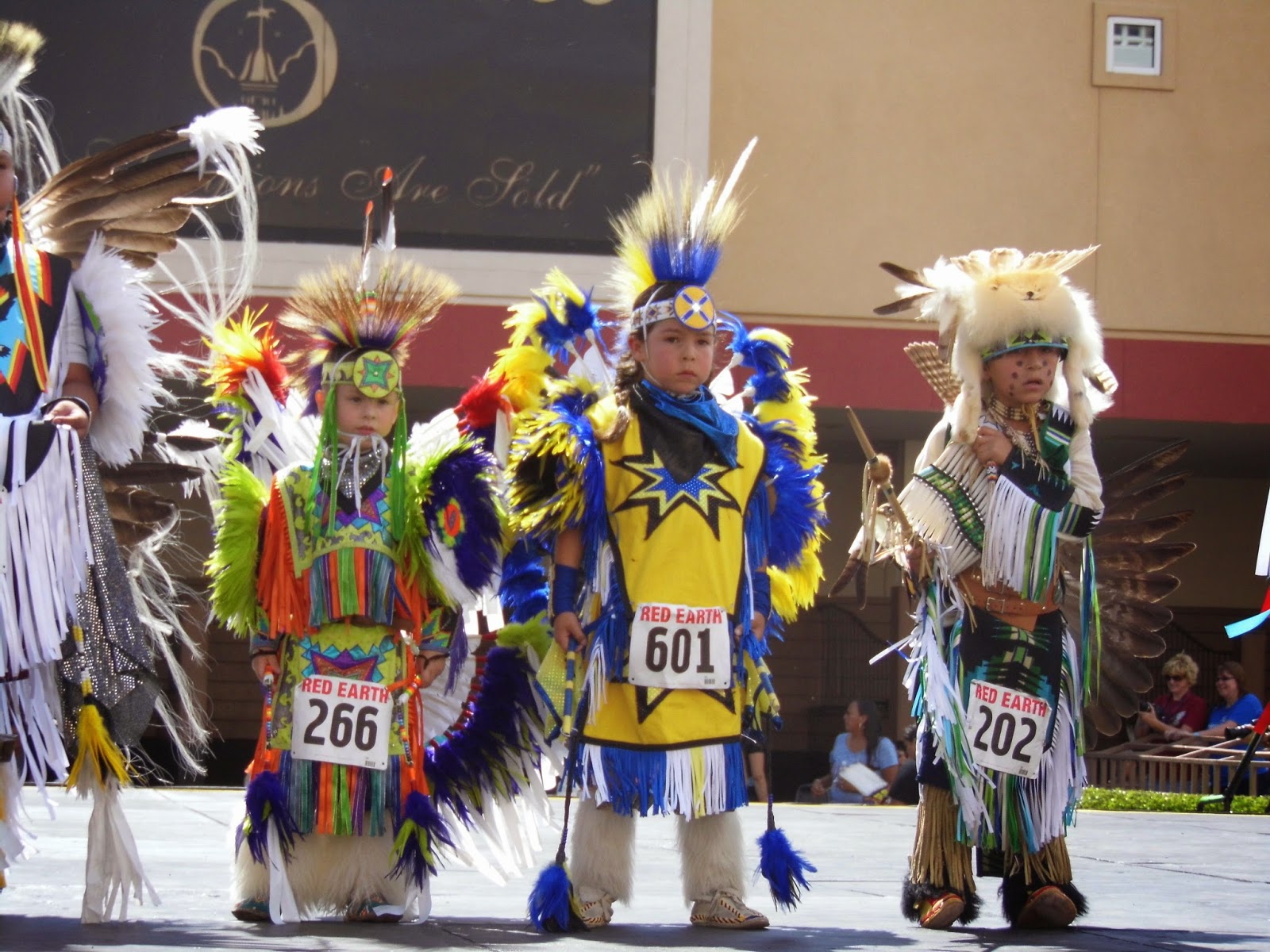 Red Earth is also the name given to a festival held every June in Oklahoma City and rated in the top ten Native American events in the country. It begins with a parade of participants in full regalia through downtown Oklahoma City and passes under the gaze of the impressive Devon tower – the tallest structure west of the Mississippi River. It then circles the Myriad Gardens, home to the beautifully crafted botanic gardens and surrounded by play parks for all the family to enjoy. The festival runs for three days in Remington Park, which more usually hosts horse racing events – a short ten-minute drive from mid-town.
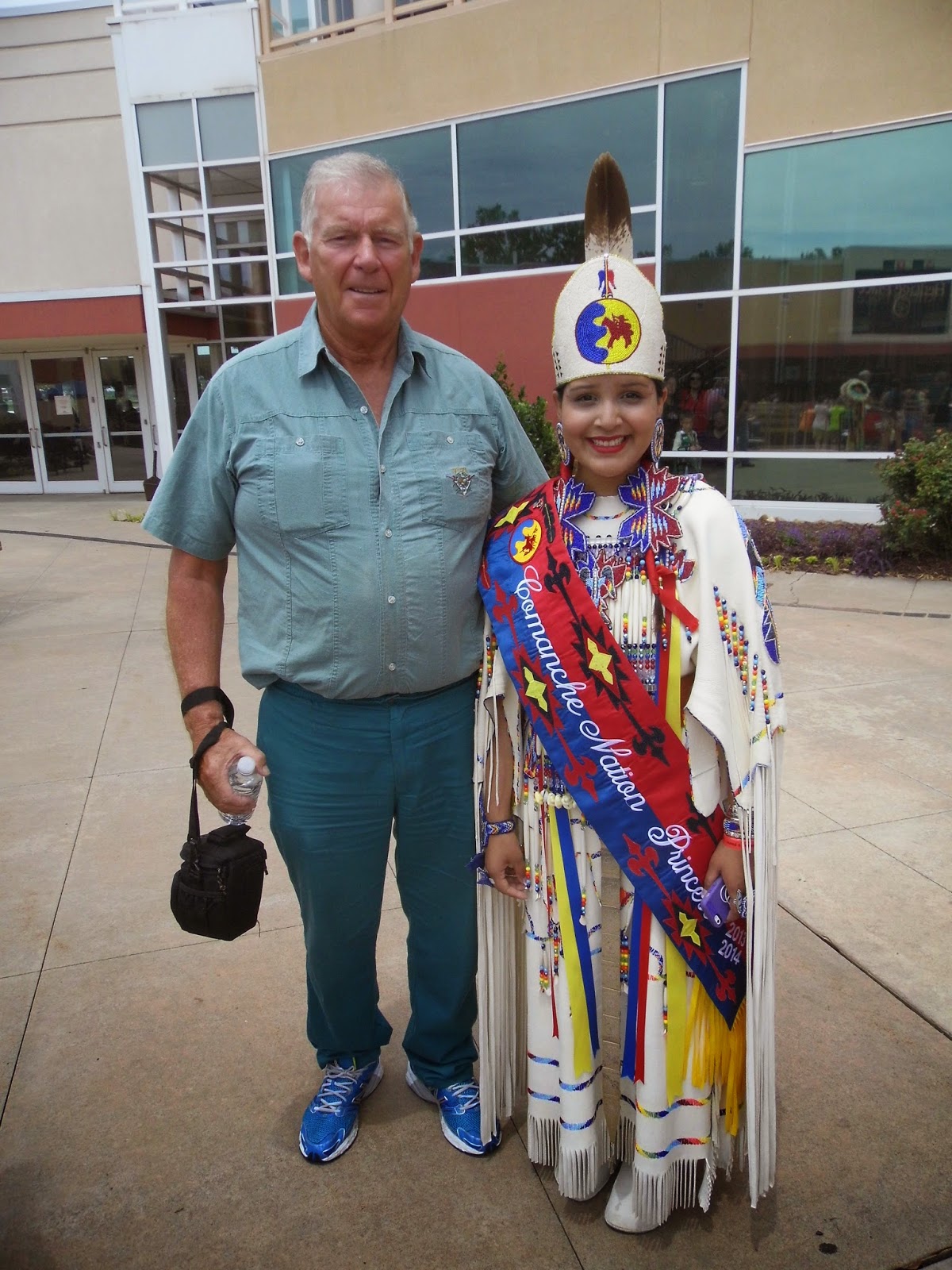 Dad and I potter around the display of paintings and handcrafted products ranging from basketry to hand-crafted instruments. We lose the run of ourselves and buy dream catchers and reed flutes. Out on the paddock, the main stage hosts various dancing and singing competitions, showing the talent of a wide-variety of tribes from across the country. “That’s brilliant stuff,” Dad says as he poses for a photograph with the gorgeous Ms Comanche Nation. Dancers include men, women and children and the Fancy Dances are definitely the highlight.
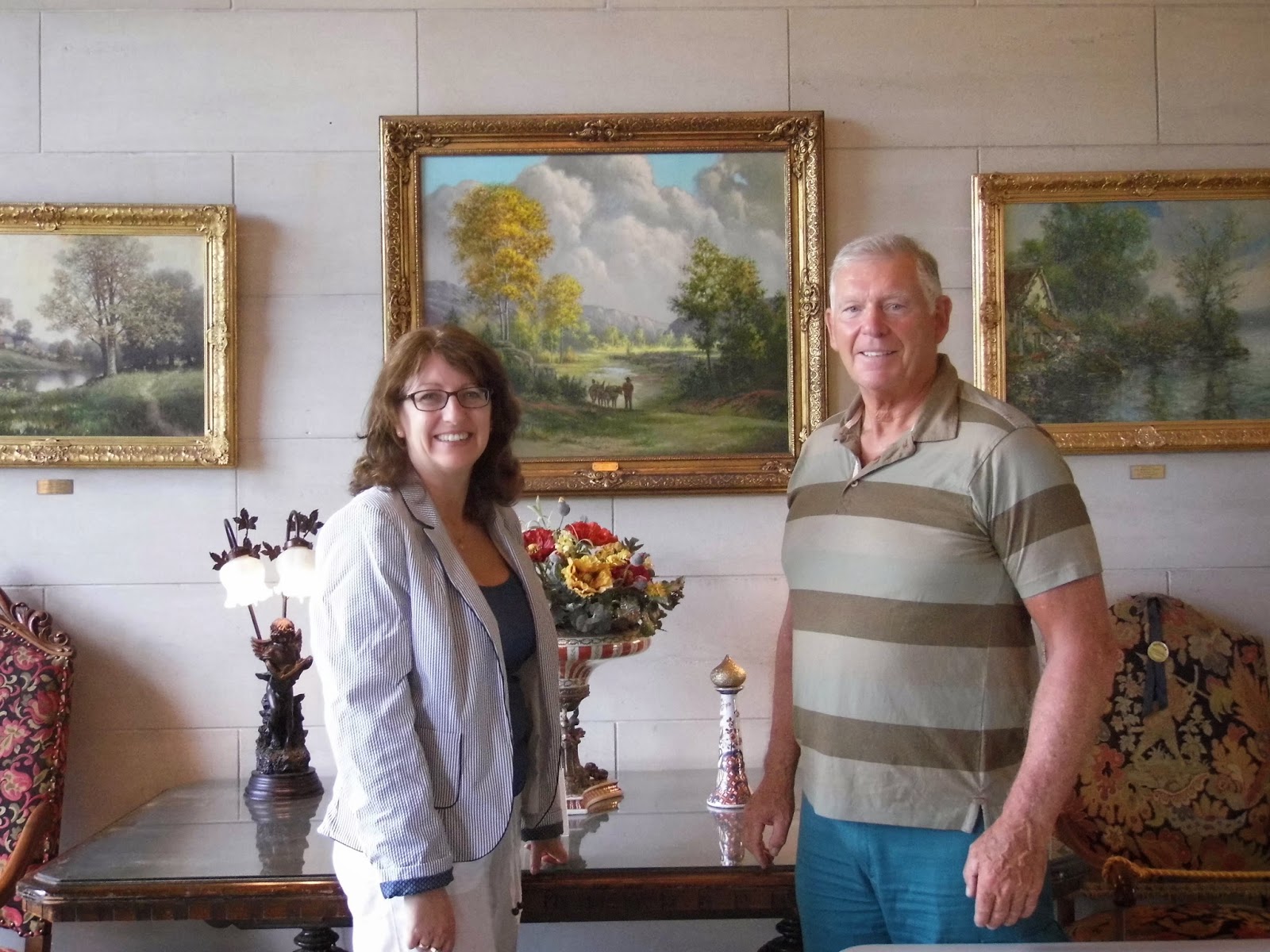 My father isn’t usually one to drive when he goes on holidays but a car is a must in this state and Dad finds it incredibly easy. “These are brilliant roads!” he says as yet again he insists I take the passenger seat. Ten-minutes outside Oklahoma City, the sense of space becomes overwhelming. Wide open plains, dotted with water pumping windmills and spectres of lone oil drills, roll by. Roads are easy to navigate and in a little over one hour we reach Ponca City. The statue of the Pioneer Woman by Bryant Baker, is one of the landmarks in this town and the story behind Ernest Marland who commissioned this work is enthralling.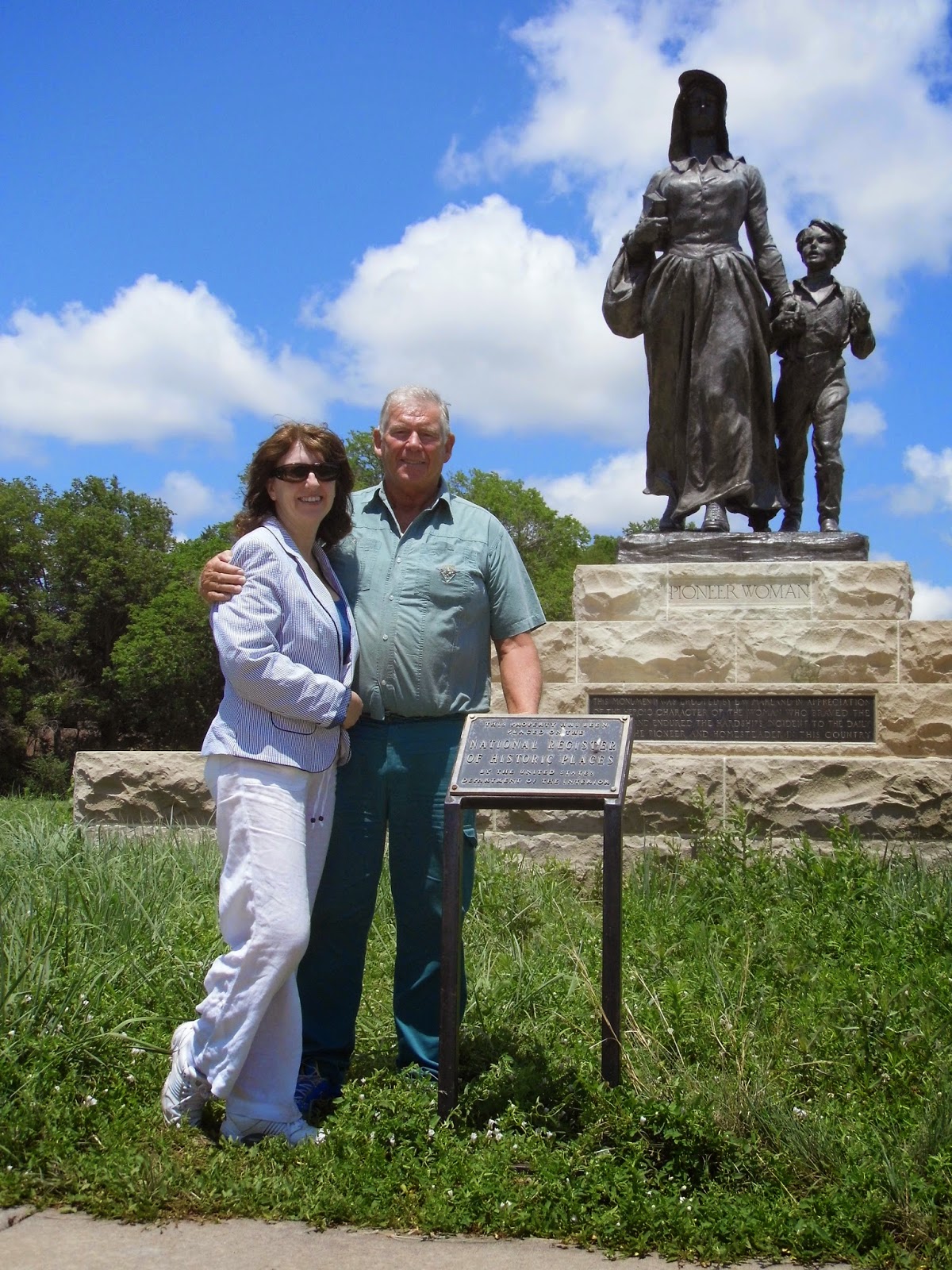
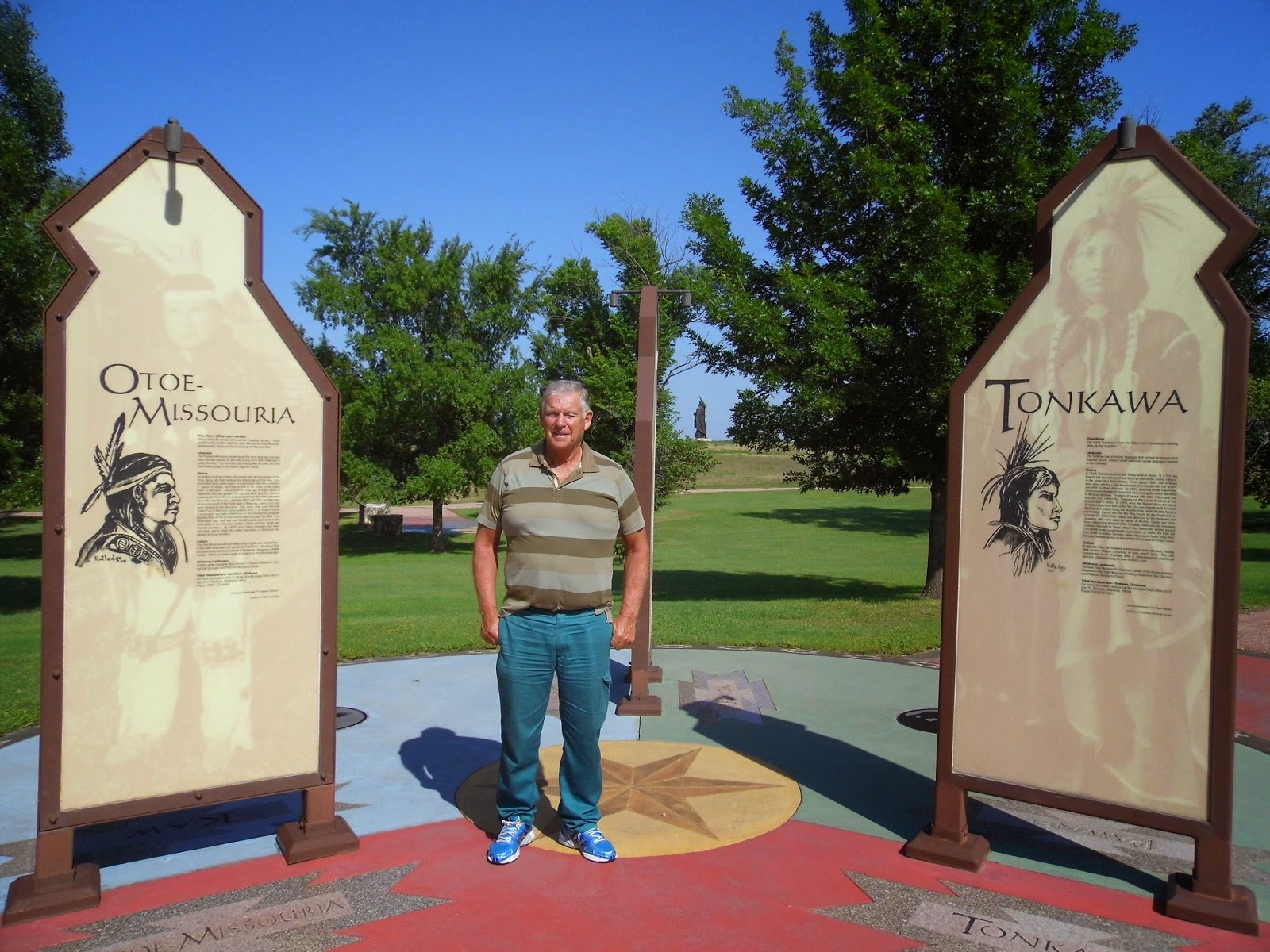
Outside Ponca City, tall grass prairies stretch for miles and new herds of buffalo have been introduced to roam wild and free. “You know when the white man killed the buffalo he really finished the Indians,” my Dad, reminds me. He’d told me this as a child as I’d sat watching a western on TV and suddenly I’m overwhelmed by the moment and this father and daughter adventure that we are so lucky to experience together. The story of the Ponca chief, Standing Bear is commemorated in the visitor centre just south of the city and en route to a very different Native American story in Chickasaw Country.
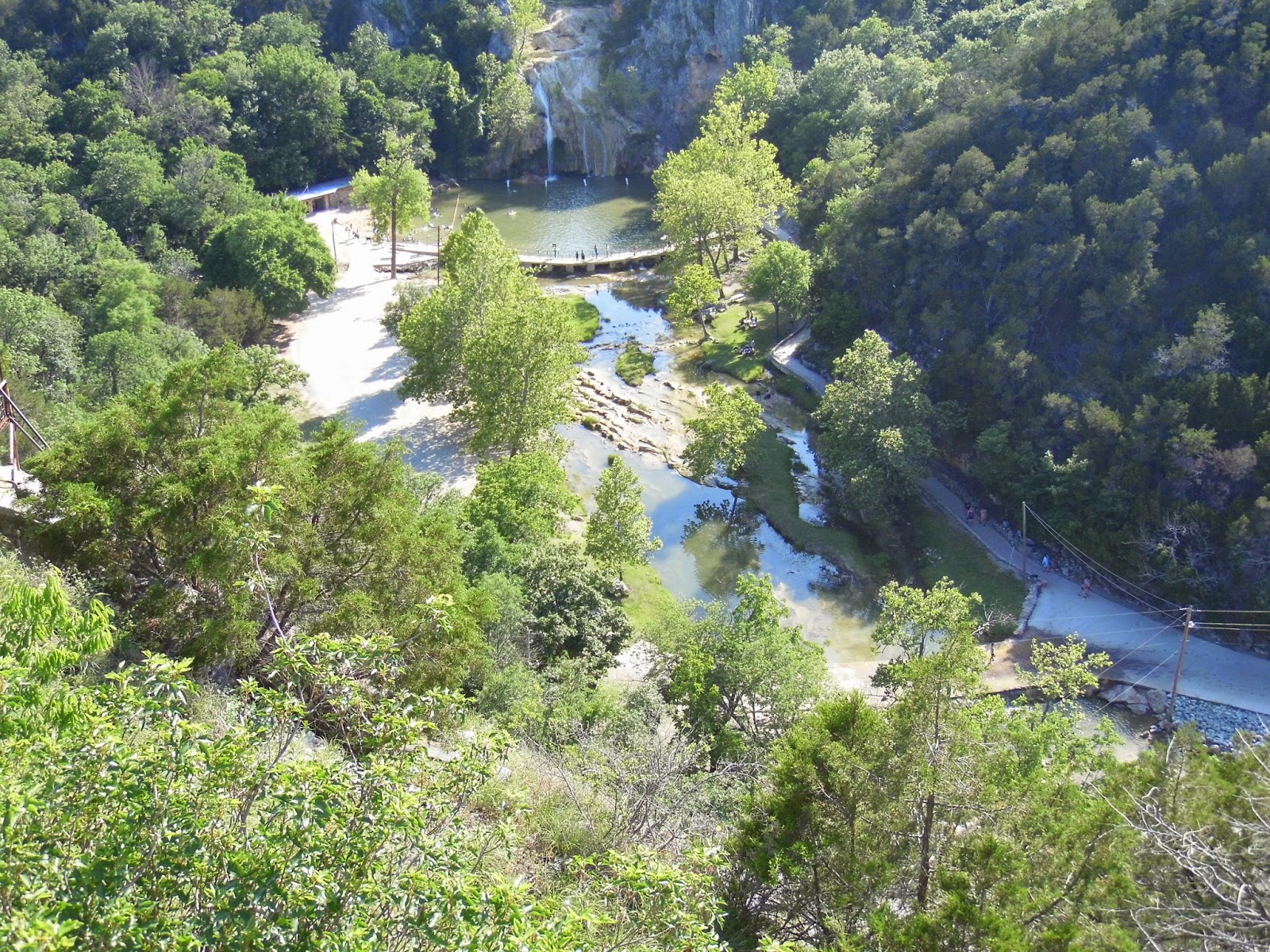
A two-and-a-half hour drive brings us to the town of Sulphur, to learn about a tribe who’ve gone from strength to strength over the last sixty years through good management. They have made their fortune from casinos, and filtered the profits into various enterprises that have enriched and secured their culture for generations to come. Blessed with a wonderful location, nestled amongst the Arbuckle Mountains, Chickasaw country is one of the best places to find hidden Oklahoma. The tribe recently rebuilt the famous Artesian Hotel in Sulphur. My father delights in the fact that in its heyday the hotels guests included John Wayne and Grace Kelly. Many came to benefit from the healing properties, allegedly found, in the nearby springs that give the town its name. The Artesian is refurbished to a very high standard and has a spectacular spa and casino. Log cabins and camping facilities are available in the Chickasaw Recreation Area with plenty of fishing and swimming to be enjoyed in the lakes and travertine falls.
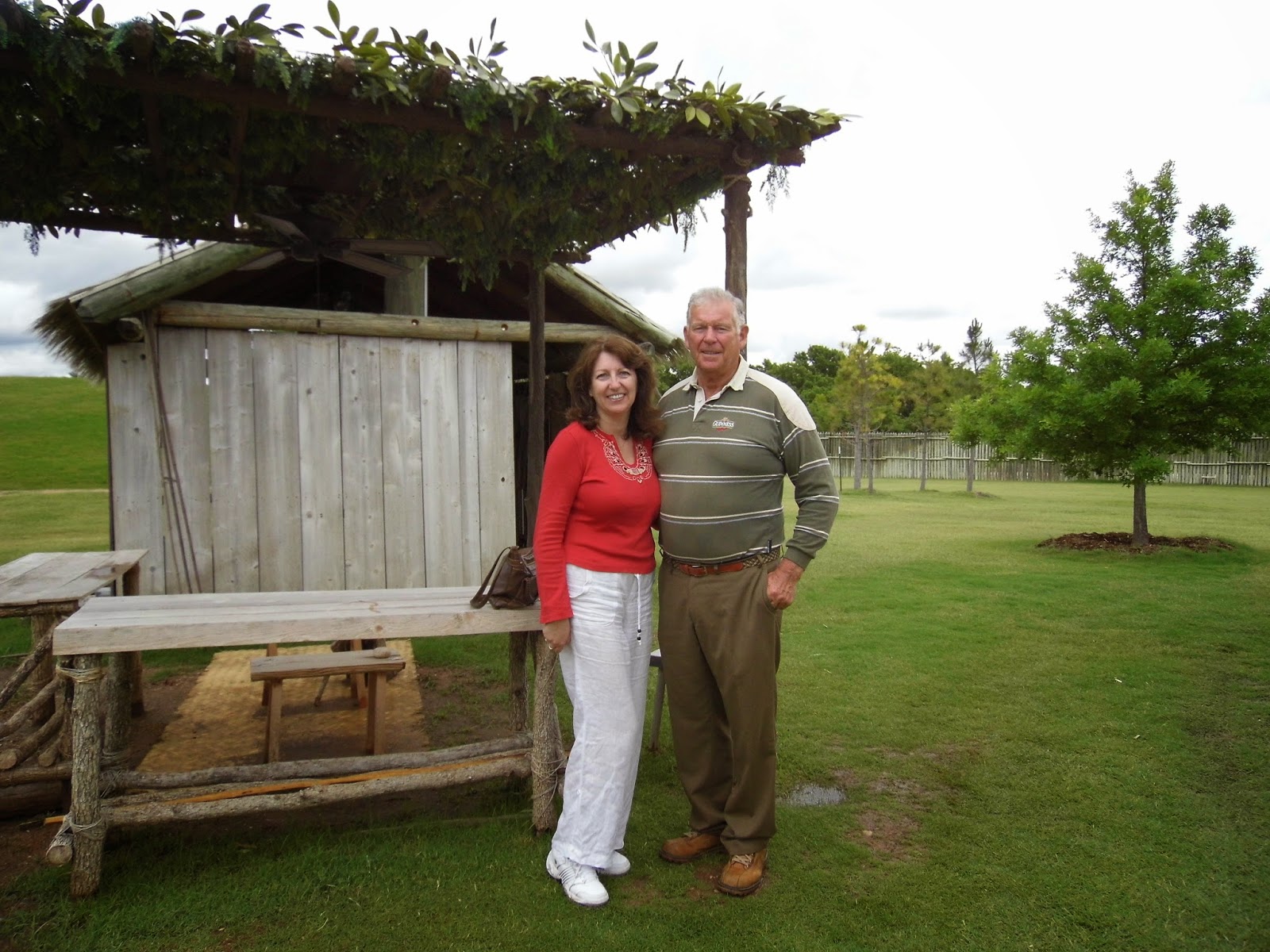 We don’t realise that the highlight of our visit is yet to come as we arrive at the Chickasaw Cultural Centre. Located outside the town of Davis, we are met by our guide Francine. She is part Chickasaw, Creek and Cherokee and she not only explains and describes the centre but gives us insight into the history of her own family. Francine’s father has passed on but he crops up so much in conversation it is as if he is walking along beside us. The Chickasaws are one of the five-civilised tribes forced to leave their farmed lands in Tennessee and Alabama in the 1830’s and walk the ‘Trail of Tears’ to resettle in Indian country. It is poignantly portrayed in a statue in the centre of the park – similar to our own famine statue in Dublin.
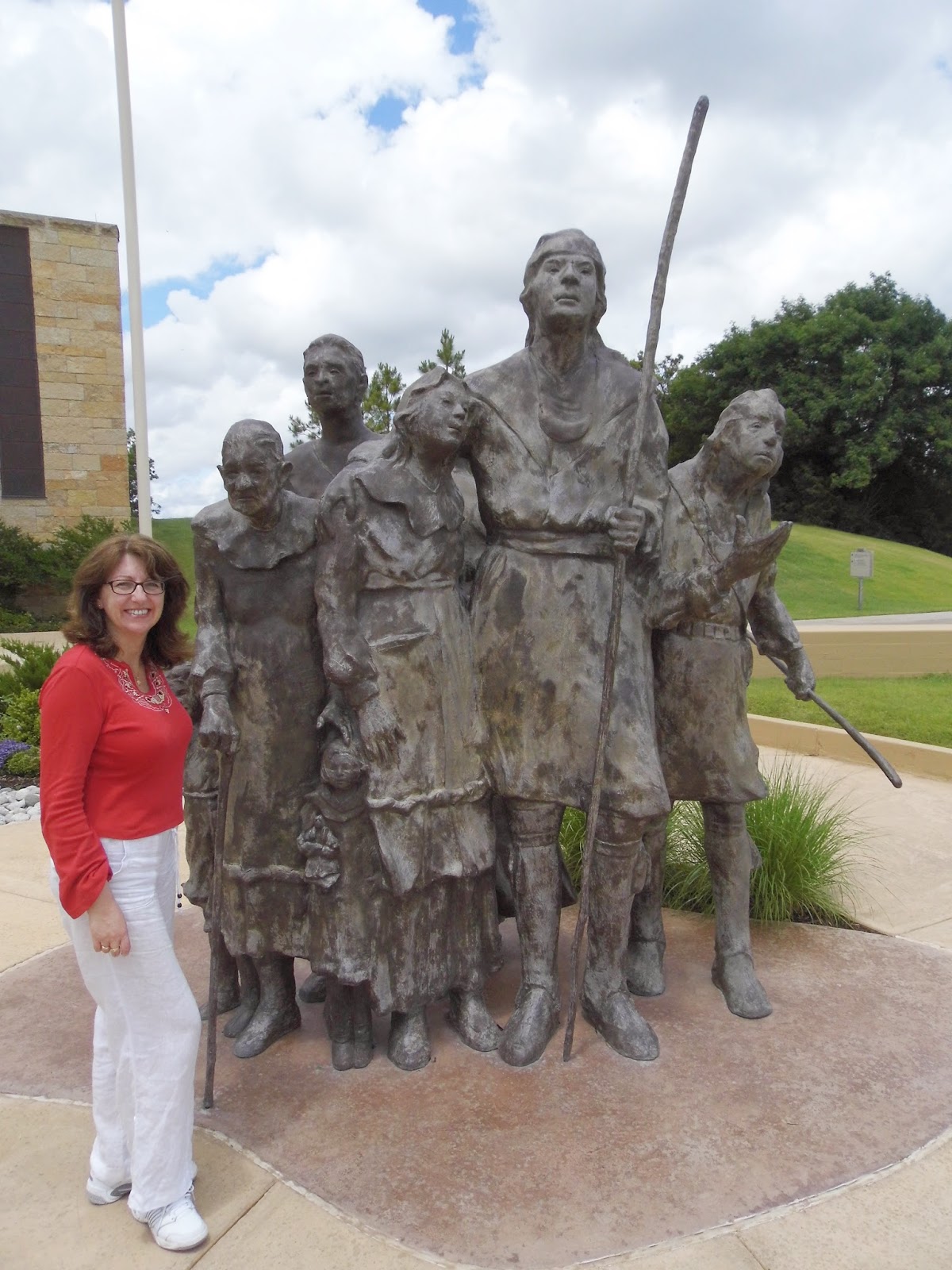
The pain is clear on the faces of each character and Francine tells how her father passed down the stories of this terrible time. “He’d smoke tobacco while he spoke, and I’d feel the terrible weight in my own feet that my fore-fathers felt as they walked the trail.”